


Family Wealth Transfer Anxiety
For many families, the hardest question about passing on wealth is not how much to leave, but what that wealth might change.

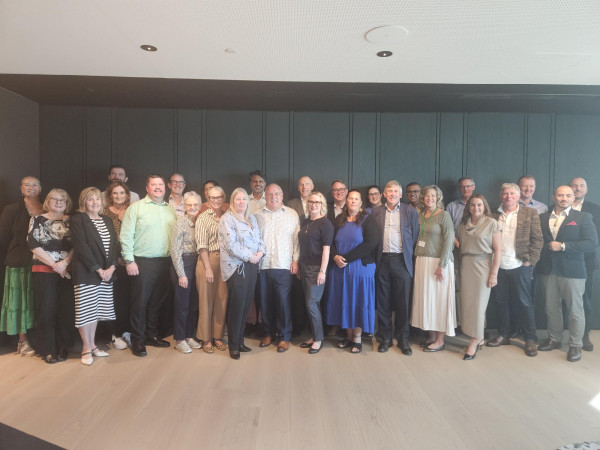
In April 2026, JBWere New Zealand’s Philanthropic Services team hosted the Governance for Social Impact course for the first time in Aotearoa New Zealand.
Developed by the Centre for Social Impact (Australia) and reframed for the New Zealand context through Te Ao Māori and Te Tiriti lenses, the world leading practitioner-led course brought together experienced for-purpose governors and executives to strengthen how boards govern for lasting social impact.
Across two intensive days, participants were challenged to move beyond traditional governance settings of compliance, risk and organisational oversight, and to deeply consider how boards can govern in ways that genuinely live their mission and improve outcomes for the people and communities they exist to serve.
The course placed strong emphasis on beneficiary-led and beneficiary-informed governance – it explored how to govern within complex social ecosystems, lead with a mission-first agenda, understand an organisation’s role in systems change, measure what matters most, and demonstrate ethical leadership in uncertain and demanding times.
The facilitators, Shamal Dass (Head of Philanthropy & Family Advisory JBWere Australia) and Te Pūoho Kātene (Ngāti Toa, Ngāti Whātua, Ngāti Tama) used cautionary examples to show the risk of well-intentioned interventions that are not sufficiently grounded in the preferences, behaviours or cultural context of the people they are intended to serve.
It was clear that this is where social change actually happens. It is where power and resources sit, and what levers can create meaningful and durable impact.
A central theme was the need for boards to lift their gaze from organisational performance alone to mission and systems wide performance. Through the sharing of practical frameworks and thoughtful group exercises, participants improved their understanding of systems mapping, stakeholder materiality, theory of change, impact measurement and scale-readiness tools.
Guest speakers from the for-purpose sector, Pat Snedden (Manaiakalani Trust), Helen Robinson (Auckland City Mission) and Sneha Lakhotia (The Social Prism), brought their personal experiences of impactful leadership and measuring a social return on investment.
Read Pat’s speech notes, Leadership grounded in purpose here and Sneha’s Using evidence to drive governance decisions here.
The value of the programme was clear. The inaugural New Zealand cohort achieved a world-class Net Promoter Score of 82, with participants repeatedly describing the course as practical, immediately relevant, invaluable and “the most applicable course I’ve seen to date”. 91% strongly agreed they intended to apply what they had learned in their roles, 95% strongly agreeing the course content would support them to be more effective in governance practice.
For JBWere, hosting this course reflects our commitment to strengthening governance, strategy and philanthropic capability across Aotearoa New Zealand’s for-purpose sector. Effective governance is one of the most important enablers of enduring social impact. This course showed what is possible when boards are given the space, tools and challenge to ask better questions, sit with complexity and govern not only for organisational effectiveness, but for deeper, fairer and more lasting positive change.
If you would like to be informed of the next Governance for Social Impact or similar thought leadership learning opportunities, contact a JBWere Adviser or our Philanthropic Services team.

For many families, the hardest question about passing on wealth is not how much to leave, but what that wealth might change.

The $25. 8 billion sector hiding in plain sight New Zealand’s for-purpose ecosystem employs one in 13 workers and contributes as much to GDP as financial and insurance services.


 Video
Video
Bond markets may not always capture attention, but they have become an important focus for investors.

Loading form...